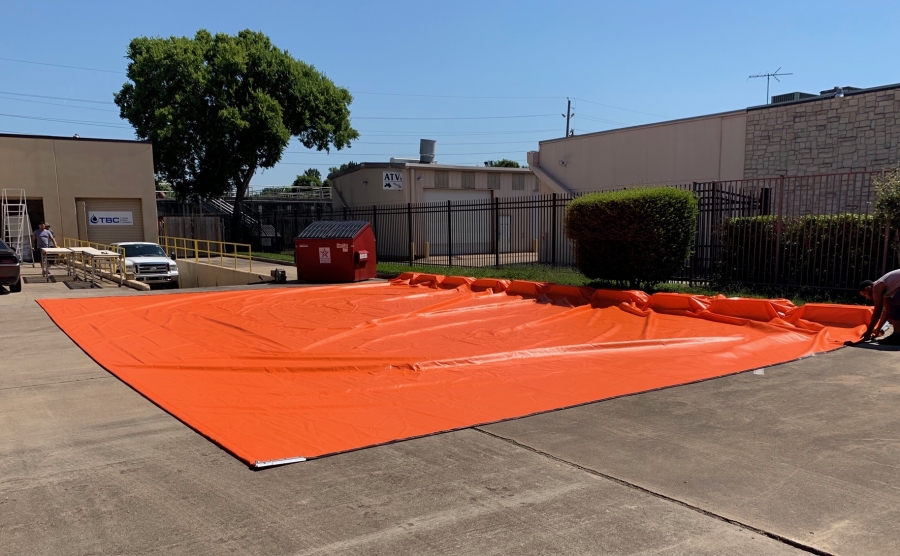
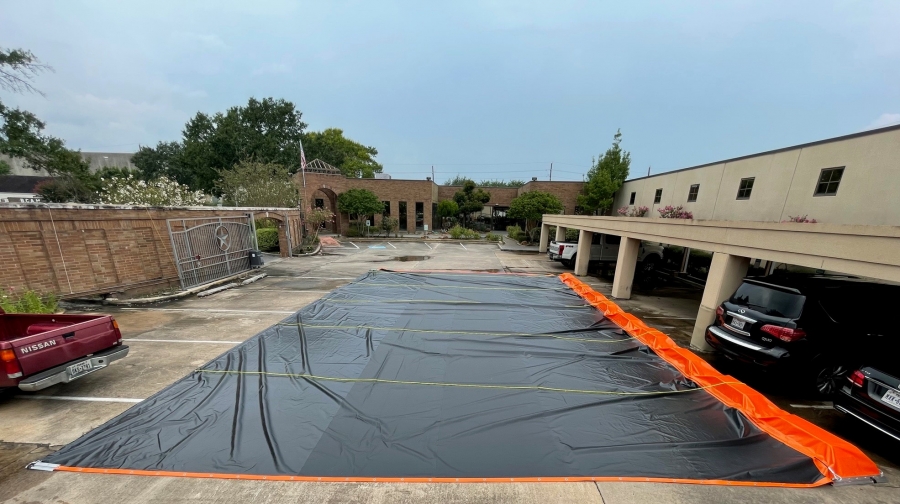
Type 3 Turbidity Curtain
DOT Turbidity Curtains for Challenging Marine Environments
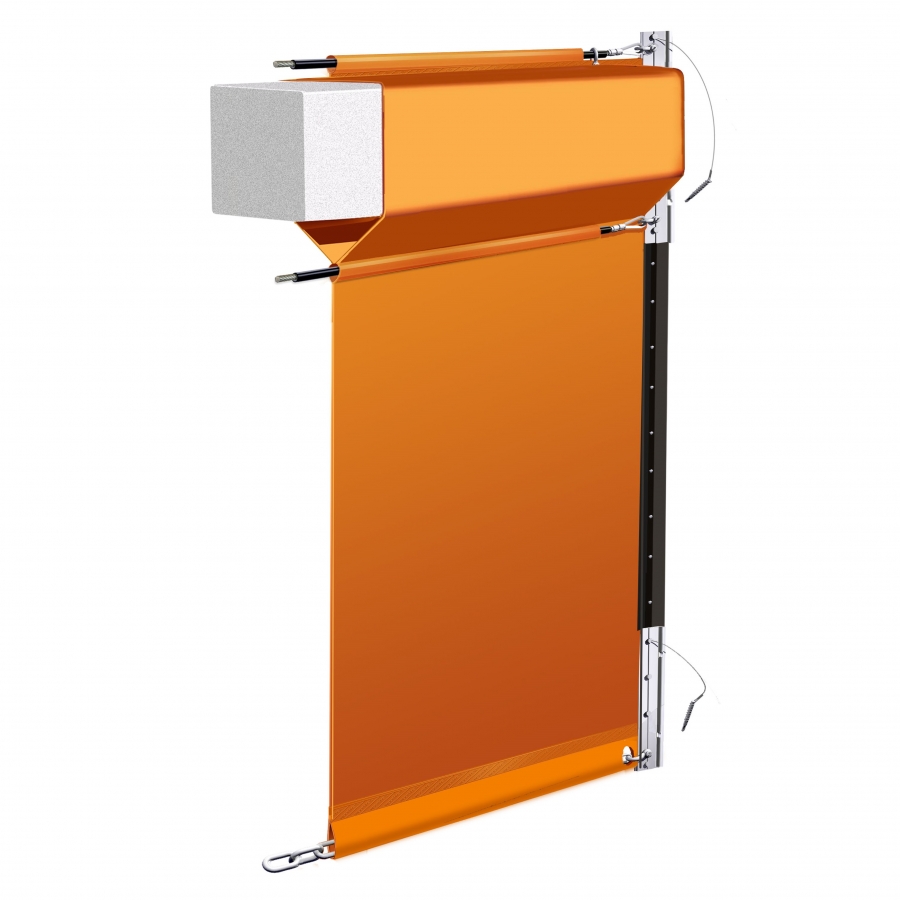
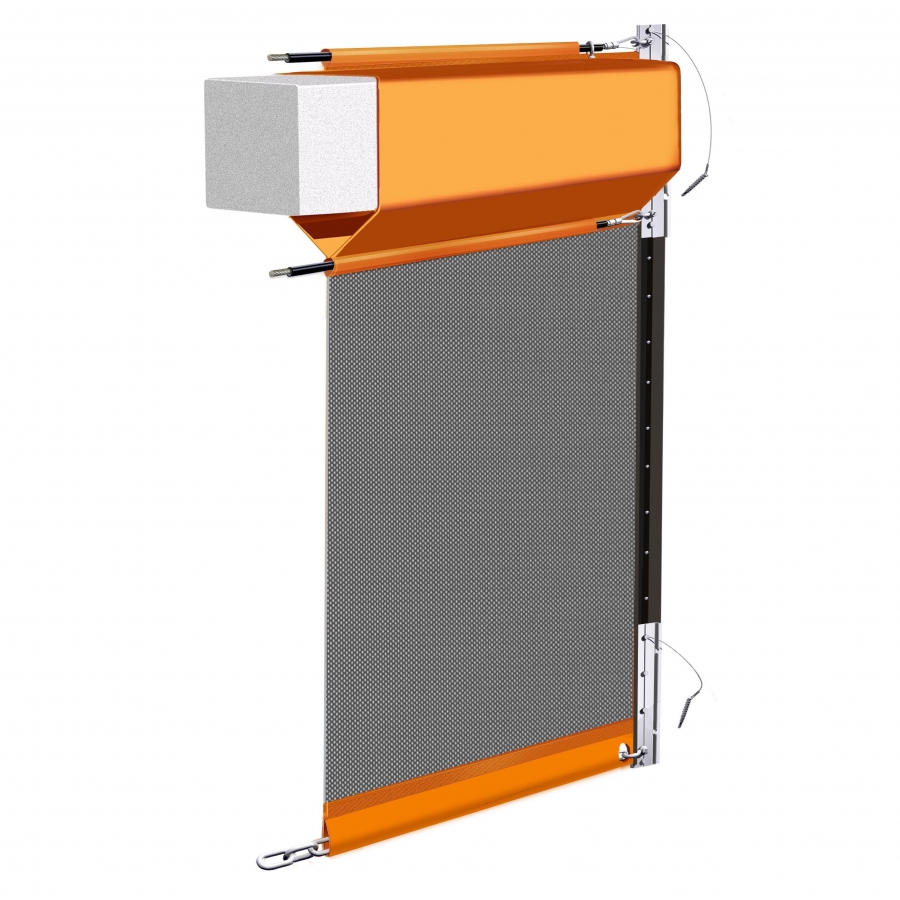
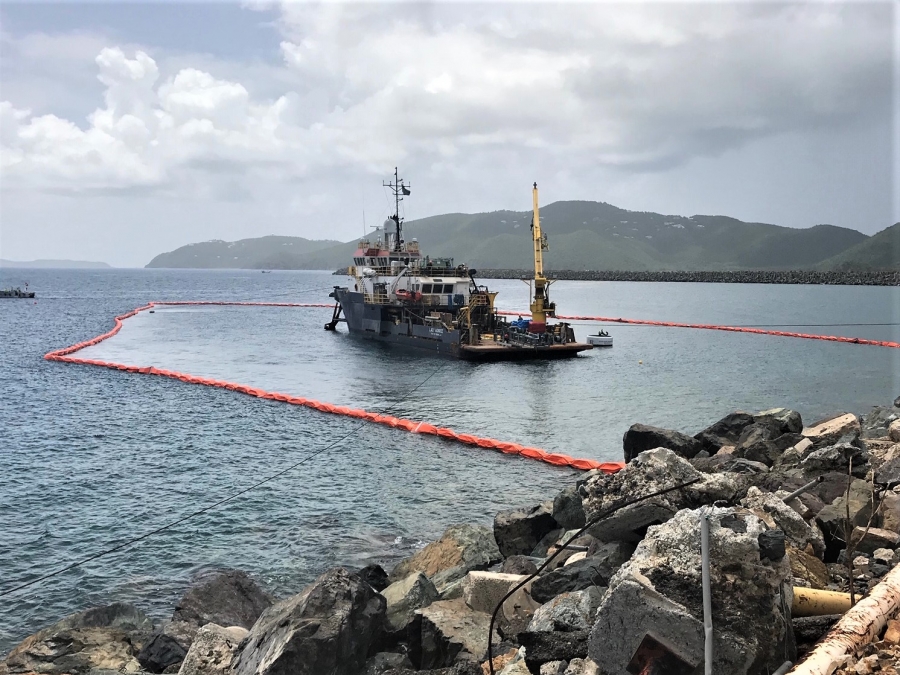
Texas Boom Company's Type 3 turbidity curtains deliver maximum-strength sediment control in demanding water conditions throughout the Gulf Coast and nationwide. Built to withstand currents up to 5 feet per second, significant wave action, and tidal forces, our Type 3 barriers feature reinforced PVC fabric, dual tension cables, and galvanized steel ballast chains that marine contractors trust for critical projects in rivers, harbors, and exposed waters.
Quick Product Specifications
- Section Lengths: 50 ft and 100 ft sections (custom orders available upon request)
- Skirt Depths: 3 ft to 50 ft
- Skirt Type: Both permeable and impermeable options
- Fabric: PVC-coated polyester fabric with EPS flotation
- Applications: Rivers, bays, harbors, and other waterways
When to Use Type 3 Turbidity Curtains
Ideal Water Conditions
Type 3 turbidity curtains are specifically designed for moving waters with some waves, wind, or tidal action.
Perfect for:
- Coastal or Marine Construction
- DOT Road and Bridge Construction
- Dredging
- Mining
- Pile Driving
Current Specifications
Type 3 curtains are designed for water flow conditions up to 5 feet per second. For sites with calmer conditions, consider our Type 1 or Type 2 turbidity curtains.
Key Features & Benefits
- Superior Sealing: Constructed using RF Welds, with flotation chambers being individually sealed for maximum durability and water containment
- Universal Connection: ASTM Universal aluminum end connector plates for seamless connection with other Type 3 turbidity curtains to create longer barrier systems
- Easy Handling: Flotation segments are 3 ft long for superior wave conformity, ease of handling & storage
- Cost-Effective Solution: Economical option designed for deployment in a wide range of applications while maintaining professional-grade performance
- Custom Sizing: Skirt height can be customized and tapered to conform to the bottom profile of the body of water for optimal sediment control
- Enhanced Stability: Ballast chain provides strength and stability to maintain proper curtain position in varying water conditions
- Color Options: Typically made with fabric color of orange or yellow for high visibility, with other colors available via special order
Compliance & Certifications
Our Type 3 curtains can be customized to help your work meet Federal Department of Transportation (DOT) requirements and ensure compliance with the Clean Water Act and National Pollution Discharge Elimination System (NPDES), protecting your project from potential fines and delays.
Installation & Deployment Guide
Pre-Installation Planning
Proper installation is critical for effective sediment control in demanding marine environments. Type 3 turbidity curtains require comprehensive planning to withstand strong currents, waves, and tidal conditions.
Site Assessment Checklist:
- Measure water depth at high and low tide
- Determine current speed and direction
- Identify suitable anchor points for heavy-duty anchoring systems
- Allow for an additional 10-20% deviation in straight line measurements to compensate for measuring errors and reduce stress from potential waves
- Assess tidal range and wave conditions
- Plan for anchor requirements
- Best anchorage uses a 3:1 slope. In 10 feet of water, for example, you'll need 30 feet of anchor lines
Installation Best Practices
Anchoring Requirements:
- Anchor spacing every 50 feet for tidal conditions or depths of 10-15 feet, or every 100 feet in non-tidal conditions without significant depth
- Water anchors required for Type 3 installations, using concrete blocks or Danforth-style anchors
- Anchor lines must have sufficient slack to allow barrier to float freely with tidal changes
- In tidal applications, install anchors on both sides of curtain to resist currents in both directions
- Always attach anchors below the float, never to bottom of curtain skirt to prevent damage
Explore Texas Boom Anchor Kits
Deployment Steps:
- Set all anchors (including anchor buoys) first, paying special attention to holding power under actual current or tidal conditions
- Connect sections on shore using heavy-duty connectors
- Attach tow bridle to leading edge to prevent stress tears during deployment
- Deploy furled curtain in water and secure to upstream anchor point, then sequentially attach to each downstream anchor point
- Verify position, buoyancy, and anchor security
- Cut reefing twine to allow skirt to drop only after confirming proper positioning
Depth Considerations
In tidal and/or wind or wave action situations, maintain a minimum 1-foot clearance between skirt and bottom to prevent sediment disturbance from tidal movement.
Maintenance & Longevity
Regular Inspection Protocol
Inspect turbidity curtains daily, with additional monitoring during storms or increased flow events. Any visible plume passing beyond the curtain requires immediate modification or repair.
Monthly Maintenance Tasks:
- Check for UV damage or fabric wear
- Remove excessive marine growth
- Inspect ballast chain and load lines for corrosion
- Verify top load line integrity
- Check anchor points and buoy positions for security
- Ensure tidal compensators (if used) are functioning properly
Storage & Care
After project completion:
- Rinse salt water deployments with fresh water
- Clean marine growth with pressure washer
- Inspect and repair any damage to fabric or load lines
- Dry completely before storage
- Store in cool, dry location away from direct sunlight
Technical Specifications
| Standard Type III (DOT) | Heavy Duty Type III | |
|---|---|---|
| Fabric | 22 oz per sq ft PVC | 22 oz per sq ft PVC or heavier |
| Floatation | 8” closed cell foam in sealed pockets | 10” or larger closed cell foam in sealed pockets |
| Top Tension | 5/16" Galvanized steel cable | 5/16" Galvanized steel cable |
| Ballast | 3/8" Galvanized steel chain | 3/8" Galvanized steel chain |
| Skirt Height | 3 ft – 50 ft Skirt height can be tapered to conform to bottom profile | 3 ft – 50 ft Skirt height can be tapered to conform to bottom profile |
| End Connection | ASTM F962-94 universal “Z” connectors on top and bottom. Lacing Grommets on reinforced ends on both ends between connectors. Rope, strong zip ties or nuts and bolts can be used through the grommets. | ASTM F962-94 universal “Z” connectors on top and bottom. Lacing Grommets on reinforced ends on both ends between connectors. Rope, strong zip ties or nuts and bolts can be used through the grommets. |
| Section Lengths | 50 ft, 100 ft | 50 ft, 100 ft |
DOT Standard Type 3 Specification Sheet
Heavy Duty Type 3 Specification Sheet
Why Choose Texas Boom Company?
Extensive Expertise
With experience serving marine contractors throughout the Gulf region and the greater U.S., we understand the unique challenges of coastal construction. Our Type 3 turbidity curtains are engineered to withstand the conditions of moving water while meeting regulatory requirements.
Competitive Advantage
- In-stock availability for immediate shipping
- Bulk pricing for large projects
- Technical support from sediment control experts
- Proven track record with DOT projects
- Made in USA quality assurance
Fast, Reliable Delivery
We maintain an extensive inventory of 50 ft and 100 ft sections in popular skirt depths, ensuring rapid deployment to your job site. Many orders ship within 24-48 hours.
Request a quote on Type 3 turbidity curtains today.
Frequently Asked Questions
What makes Type 3 curtains different from Type 1 and Type 2?
Type 3 curtains are built with heavy-duty PVC fabric, galvanized steel ballast chain, large flotation, and dual tension cables.
How often should Type 3 curtains be inspected?
Turbidity curtains installed in areas with high winds and currents should be inspected every day, as well as those in areas with high marine traffic. Daily inspections are critical for Type 3 installations due to the challenging conditions they face.
Can Type 3 curtains extend to the bottom in tidal areas?
In tidal and/or wind or wave action situations, the curtain should never extend to the bottom. Instead, a minimum of 1 foot between the skirt and the bottom should exist so that the movement of the skirt generated by tidal back and forth motion does not fan or stir sediments.
Should I choose permeable or impermeable fabric for my Type 3 curtain?
Impermeable curtains block all water flow and work best for short-term projects requiring total containment in calm to moderate currents.
Permeable curtains filter water while trapping sediment, making them ideal for long-term projects in high-current areas where water pressure could damage solid barriers. They reduce stress on the curtain and extend its lifespan.
Most Type 3 applications benefit from permeable designs due to the challenging water conditions they face, but choose impermeable when complete work area isolation is critical.
Sieve 40
| PROPERTY | TEST METHOD | MARV ENGLISH | MARV METRIC |
|---|---|---|---|
| Tensile Strength (Grab) | ASTM D4632 | 350 x 200 lbs | 1557 x 890 N |
| Elongation (Grab) | ASTM D4632 | 15% x 15% | 15% x 15% |
| Trapezoidal Tear Strength | ASTM D4533 | 100 x 70 lbs | 445 x 312 N |
| CBR Puncture | ASTM D4833 | 800 lbs | 3559 N |
| UV Resistance (500 hrs) | ASTM D4355 | 90% | 90% |
| Apparent Opening Size* | ASTM D4751 | 40 US Std. Sieve | 0.425 mm |
| Percent Open Area (POA) | COE-02215 | 6% | 6% |
| Permittivity | ASTM D4491 | 0.5 sec^-1 | 0.5 sec^-1 |
| Water Flow Rate | ASTM D4491 | 60 gpm/ft^2 | 2460 lpm/m^2 |
*Maximum Average Roll Value
Sieve 70
| PROPERTY | TEST METHOD | MARV ENGLISH | MARV METRIC |
|---|---|---|---|
| Tensile Strength (Grab) | ASTM D4632 | 370 x 250 lbs | 1645.8 x 1112.1 N |
| Elongation (Grab) | ASTM D4632 | 15% x 15% | 15% x 15% |
| Trapezoidal Tear Strength | ASTM D4533 | 100 x 100 lbs | 445 x 445 N |
| CBR Puncture | ASTM D6241 | 950 lbs | 4228 N |
| UV Resistance (500 hrs) | ASTM D4355 | 90% | 90% |
| Apparent Opening Size* | ASTM D4751 | 70 US Std. Sieve | 0.212 mm |
| Percent Open Area (POA) | COE-02215 | 4% | 4% |
| Permittivity | ASTM D4491 | 0.28 sec^-1 | 0.28 sec^-1 |
| Permeability | ASTM D4491 | .01 cm/sec | .01 cm/sec |
| Water Flow Rate | ASTM D4491 | 18 gpm/ft^2 | 733 lpm/m^2 |